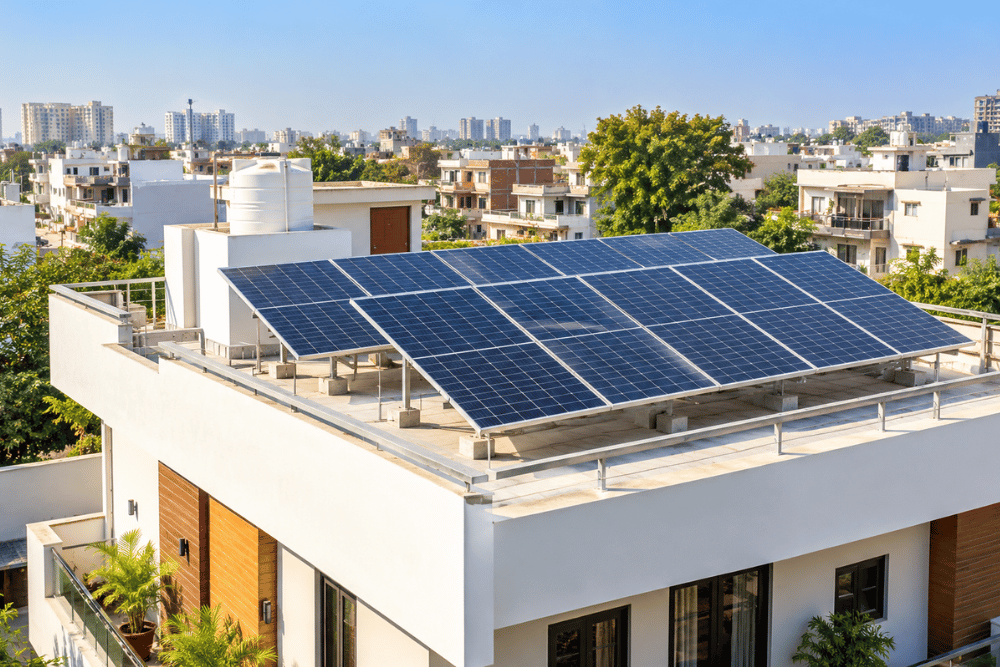
Solar Panel Installation in Delhi NCR: A Complete Guide
Electricity has become an essential part of everyday life in Delhi NCR, whether you live in an apartment, own an independent house, operate a shop, manage an office, or run a commercial facility. From air conditioners and refrigerators to computers, water pumps, lighting, and industrial equipment, our dependence on electricity continues to grow, especially during Delhi's long and demanding summer season. As monthly electricity bills put increasing pressure on household budgets and business expenses, more property owners are exploring solar energy as a practical way to generate their own electricity and reduce their dependence on conventional power sources. Rooftop solar panels make it possible to use the sunlight available across Delhi, Noida, Gurugram, Ghaziabad, Faridabad, and other parts of the National Capital Region to produce clean electricity directly at the property where it is needed.
For homeowners and businesses considering this change, solar energy is about more than installing a few panels on a roof. It involves understanding your electricity consumption, choosing the right system capacity, evaluating the available rooftop space, selecting reliable equipment, and ensuring that the installation delivers value over the long term. At Bhardwaj Solar Energy, our vision is to provide reliable, sustainable, and high-efficiency solar power solutions that help customers move towards a cleaner and greener tomorrow. This guide explains how rooftop solar works, what customers in Delhi NCR should consider before installing a system, how electricity savings are calculated, and why choosing the right solar solution can make a meaningful difference to your home or business.
Why Is Solar Energy Becoming Important in Delhi NCR?
Delhi NCR has a combination of high electricity demand, significant summer cooling requirements, and many residential and commercial buildings with potentially usable rooftop space. During the summer months, air conditioners, coolers, refrigerators, and water pumps can increase electricity consumption considerably. For example, a family living in an independent house in Delhi may use relatively little electricity during mild winter weather but experience a substantial increase in consumption from April through July when air conditioning becomes necessary for several hours a day. A shop or office in Noida or Gurugram may face a similar challenge because computers, lighting, cooling equipment, and other electrical systems operate throughout business hours. In these situations, rooftop solar can generate electricity during daylight hours, helping meet a portion of the property's demand when consumption is often high.
The region also presents practical considerations that customers should understand before making an investment. Delhi NCR experiences dust, construction activity, seasonal pollution, hot summers, and periods of cloudy or hazy weather, all of which can influence solar panel performance or maintenance requirements. A system that works well in one location may produce different results at another property because roof orientation, shading from neighbouring buildings, panel placement, and local weather conditions affect the amount of electricity generated. This is why solar installation should begin with an assessment of the property rather than an assumption that every rooftop will produce the same results. A properly designed system takes local conditions into account and provides a more realistic estimate of expected generation and potential savings.
How Does a Rooftop Solar System Work?
A rooftop solar system converts sunlight into electricity using photovoltaic cells installed inside solar panels. When sunlight reaches these cells, they generate direct-current electricity, which an inverter converts into alternating-current electricity suitable for most household appliances and commercial equipment. The electricity produced can be used to operate air conditioners, fans, lights, refrigerators, computers, and other compatible electrical loads. In a typical grid-connected installation, the property continues to receive electricity from the local distribution network whenever solar generation is insufficient, such as at night or during periods of low sunlight. Depending on the approved system configuration and applicable electricity regulations, surplus solar electricity may also be exported to the grid under the relevant metering arrangement.
Consider a family in Ghaziabad that consumes electricity throughout the day, including operating a refrigerator, washing machine, fans, and an air conditioner. When the rooftop system generates sufficient electricity during daylight hours, these appliances can use solar-generated power, reducing the amount of electricity the family needs to purchase from the grid at that time. If the family uses more electricity than the panels generate, the grid supplies the difference. After sunset, a conventional grid-connected solar system without battery storage generally relies on grid electricity because the panels are no longer generating power. Understanding this distinction is important: solar panels can reduce electricity consumption from the grid, but they do not automatically provide backup electricity during a power cut. A compatible hybrid or backup-capable system with suitable equipment is required if operating selected appliances during outages is a priority.
Major Benefits of Solar Panel Installation in Delhi NCR
One of the main reasons homeowners and businesses consider solar energy is the opportunity to reduce their electricity expenses over time. By generating electricity on-site, a property can use less grid electricity during periods of solar production, which may result in lower bills depending on consumption patterns, applicable tariffs, system size, and metering rules. For example, a small office in Gurugram that operates computers, lighting, networking equipment, and air conditioning during the daytime may be able to use a considerable portion of its solar generation directly rather than purchasing the same electricity from the grid. The actual financial benefit will depend on the system's output and the property's electricity tariff, so a reliable estimate should be based on electricity bills and a site assessment rather than a general promise of savings.
Another important benefit is the use of a renewable energy source. Solar panels generate electricity without directly burning fossil fuels during operation, helping reduce the emissions associated with conventional electricity consumption. For residents and businesses in a densely populated region such as Delhi NCR, adopting renewable energy can form part of a broader effort to reduce environmental impact and use resources more responsibly. Solar energy also gives property owners greater control over part of their electricity supply because they generate some of their own power instead of relying entirely on the grid. Although solar installation requires an initial investment and periodic maintenance, a properly designed system can deliver electricity for many years, making it worth evaluating as a long-term energy decision.
Rooftop solar can also help businesses manage operating costs more strategically. Electricity is an ongoing expense for restaurants, retail shops, schools, clinics, warehouses, offices, and manufacturing facilities, and daytime solar generation can be particularly useful for businesses whose operations align with sunlight hours. Imagine a warehouse in Faridabad that uses lighting, ventilation, office equipment, and electrical machinery during the working day. A suitable solar installation can supply part of this demand while allowing the business to continue using grid electricity when necessary. For a business owner, the value of solar should therefore be assessed not only by the initial installation price but also by expected annual generation, the proportion of electricity consumed on-site, maintenance requirements, equipment warranties, and the period over which the investment may recover its cost.
Choosing the Right Solar System for Your Property
The most suitable solar system depends on your electricity consumption, available roof area, budget, grid connection, and whether you need backup power. An on-grid solar system is connected to the electricity network and is commonly considered by homes and commercial properties that want to reduce their regular electricity bills. It generally does not require battery storage, which can make the initial installation less expensive than a comparable battery-based system. However, ordinary grid-connected systems are designed to shut down during a grid outage for safety unless compatible backup equipment and an approved configuration are provided. For a household in Delhi that mainly wants to reduce daytime electricity expenses and already has a reliable grid connection, an on-grid system may be an appropriate option to investigate.
An off-grid solar system operates independently of the utility grid and generally uses batteries to store energy for times when sunlight is unavailable. Such a system may be useful for a remote property or location where grid electricity is unavailable or unreliable, but its design requires careful consideration of daily electricity consumption, battery capacity, periods of limited sunlight, and the availability of any backup source. A hybrid solar system combines solar generation with battery storage and a grid connection, allowing the system to be configured for a mixture of bill reduction and backup requirements. For example, a homeowner in Noida who wants to generate electricity during the day and maintain power to selected essential appliances during an outage could explore a hybrid system. The appropriate choice should be made after evaluating the customer's actual needs rather than assuming that one system type is best for everyone.
System capacity is equally important. Installing a system that is too small may leave a large proportion of electricity consumption dependent on the grid, while choosing an unnecessarily large system may increase the initial investment without providing proportional financial benefits. A sensible starting point is to review the electricity bills for the previous 6–12 months, identify average monthly consumption, understand daytime usage, and examine the available roof space. A professional assessment can then help determine a suitable capacity, taking into account expected solar generation, panel layout, shading, and applicable connection limits. This process is particularly useful in Delhi NCR, where properties range from independent houses and builder floors to commercial rooftops and larger industrial buildings.
Solar Panel Installation Cost in Delhi NCR: What Determines the Price?
The cost of solar panel installation in Delhi NCR varies from property to property because there is no single price that applies to every installation. The total investment depends on the system capacity, panel and inverter specifications, mounting structures, wiring, electrical protection equipment, roof conditions, installation complexity, and whether battery storage is required. A straightforward rooftop installation on a suitable independent house may involve fewer structural adjustments than a commercial building with difficult access, extensive shading, or additional electrical work. Battery storage can also increase the initial cost, so customers who primarily want to reduce their electricity bills should compare the economics of a grid-connected system with those of a battery-based alternative before deciding.
For a practical example, imagine a household in Delhi that receives a higher electricity bill during summer because its air conditioner runs for several hours each day. The household should first review its actual consumption and determine how much electricity is used during daylight hours, when solar generation is available. The installer can then estimate the system capacity required, the expected monthly and annual generation, the total installation cost, and the potential reduction in purchased grid electricity. If the household receives a quotation, it should check whether the price includes the panels, inverter, mounting structures, cables, protection equipment, installation, testing, applicable approvals, and any monitoring facilities. Comparing quotations on the basis of their complete scope is more useful than choosing an installer solely because the headline price is lower.
It is also important to distinguish estimated savings from guaranteed savings. Solar generation changes with the weather, season, shading, equipment performance, and maintenance conditions. Electricity bills may continue to include fixed charges, taxes, and other components even when solar generation is substantial. Exported electricity is credited according to the applicable metering and billing rules, which can affect the financial value of surplus generation. A realistic financial assessment should therefore explain the assumptions behind the estimate, identify the expected electricity production, and show how the projected savings relate to the property's existing tariff and usage patterns.
Government Subsidies for Residential Rooftop Solar
Eligible residential customers in India may be able to receive financial assistance through government rooftop solar initiatives, including the PM Surya Ghar: Muft Bijli Yojana. The scheme is intended to encourage residential rooftop solar adoption, but eligibility, subsidy amounts, approved installation procedures, and other requirements must be checked against the latest official guidelines. Customers should not assume that every system, property, or consumer category qualifies for the same financial assistance. Commercial and industrial installations may follow different rules and should not automatically be treated as eligible for residential subsidies.
For customers in Delhi NCR, checking the applicable requirements before placing an order can help avoid confusion later in the installation process. Confirm whether the property and consumer category qualify, what system specifications and vendor requirements apply, which approvals or metering arrangements are necessary, and what documentation must be submitted. Information should be verified through the official PM Surya Ghar portal and the relevant electricity distribution company because scheme procedures and eligibility conditions can change. A financial calculation should remain realistic even when a subsidy may be available, and the customer should confirm the applicable benefit before treating it as a guaranteed reduction in the final cost.
Solar Panel Performance and Maintenance in Delhi NCR
Although solar power systems generally require relatively little routine maintenance, local environmental conditions make periodic inspection and performance monitoring worthwhile. Dust, pollen, bird droppings, and other deposits can accumulate on panel surfaces and reduce the amount of sunlight reaching the solar cells. Delhi NCR's dusty periods and construction activity can make this issue more noticeable at some properties, although the amount of soiling varies by location and weather. Cleaning should follow the manufacturer's recommendations and be carried out safely, using suitable methods that avoid damaging the panels. Homeowners should not climb onto roofs or attempt risky cleaning work without appropriate safety arrangements.
Monitoring electricity generation is another useful maintenance habit. If a system normally produces a predictable amount of electricity under similar weather conditions but its output falls unexpectedly, the change may indicate dirt accumulation, new shading, an inverter issue, a wiring problem, or another fault. Seasonal variations and cloudy weather must also be considered before concluding that the system is underperforming. A property owner in Gurugram, for example, could compare the inverter's generation records across similar periods and contact the installer if an unexplained reduction persists. Periodic checks of mounting structures, electrical connections, protective devices, and inverter operation can help identify issues early and support the long-term performance of the installation.
How to Select a Reliable Solar Company in Delhi NCR
Choosing the right solar installation company is an important part of protecting your investment. Solar panels may remain in service for many years, so the installation should be designed carefully, use suitable equipment, comply with applicable electrical and grid requirements, and include clear warranty information. Before making a decision, ask the company to assess the roof, review electricity consumption, explain its recommended system capacity, and provide an estimate of expected generation. A good proposal should identify the major equipment and describe what is included in the installation, helping you understand exactly what you are paying for rather than leaving important details unclear.
Customers should also review the warranties provided for the panels, inverter, and installation workmanship, because these may cover different issues and periods. Ask how system faults will be handled, whether monitoring is available, what routine maintenance may be needed, and whom to contact if generation falls unexpectedly. For a grid-connected installation, confirm the steps required for approvals and metering with the relevant distribution company. In addition, compare the expected performance and total installation scope across quotations instead of relying only on advertised savings or claims about the fastest payback period. A reliable solar solution should be based on the property's requirements, transparent pricing, suitable equipment, and realistic performance expectations.
At Bhardwaj Solar Energy, the focus is on reliable, sustainable, and high-efficiency solar power solutions that help customers take an informed step towards renewable energy. Whether you are considering rooftop solar for an independent house in Delhi, a family home in Ghaziabad, an office in Noida, or a commercial property in Gurugram or Faridabad, the first step is to understand your electricity needs and the suitability of your site. With appropriate planning and equipment selection, solar power can help reduce dependence on conventional electricity while supporting a more sustainable approach to energy consumption.
Frequently Asked Questions
Is rooftop solar suitable for homes in Delhi NCR?
Rooftop solar can be suitable for many homes in Delhi NCR if the roof receives sufficient sunlight, has adequate usable space, and can support the installation. The expected benefit depends on electricity consumption, system capacity, shading, equipment, and local electricity rules, so a site assessment is recommended before choosing a system.
Can solar panels reduce electricity bills during Delhi's summer?
Yes, solar panels can help reduce the amount of electricity purchased from the grid when they generate power. This can be useful during summer if daytime consumption from air conditioners and other appliances is high. The actual reduction depends on the system's generation, how much electricity is used while the panels are producing power, and the applicable billing arrangements.
Do solar panels work during cloudy or polluted weather?
Solar panels can still generate electricity during cloudy or hazy conditions, but their output may be lower than under clear, sunny skies. Dust and deposits on the panels may also affect performance, making appropriate system design, monitoring, and periodic cleaning important.
Will solar panels provide electricity during a power cut?
A conventional grid-connected solar system generally shuts down during a grid outage for safety reasons. To supply selected appliances during a power cut, a compatible hybrid or backup-capable system with suitable equipment is required.
How can I find out the right solar system size for my home?
Review your recent electricity bills, identify average consumption and daytime usage, and assess your available rooftop space. A qualified installer can use this information to recommend a suitable capacity and estimate generation based on the property's location and conditions.
Are government subsidies available for solar installation in Delhi NCR?
Eligible residential consumers may qualify for assistance under applicable government schemes, including PM Surya Ghar: Muft Bijli Yojana. Eligibility and benefits depend on the latest scheme guidelines and installation requirements, so verify the current details through the official portal and your electricity distribution company.
How often should solar panels be cleaned in Delhi NCR?
Cleaning frequency depends on dust levels, rainfall, surrounding construction, and the manufacturer's recommendations. Because conditions vary across Delhi NCR, monitor generation and inspect the panels periodically, arranging safe cleaning when needed
Conclusion: Is Rooftop Solar Worth Considering in Delhi NCR?
For many homeowners and businesses in Delhi NCR, rooftop solar is worth evaluating because it offers an opportunity to generate electricity on-site, reduce grid consumption, and make better use of available roof space. Its financial value depends on the initial installation cost, the amount of electricity generated, how much of that electricity is consumed directly, local tariffs, metering arrangements, and the system's long-term performance. Rather than relying on general claims that every customer will achieve the same savings, property owners should compare their actual electricity consumption with a carefully prepared system estimate and understand the equipment, warranties, and maintenance requirements before investing.
The most effective approach is to start with your electricity bills, assess your roof, compare suitable system types, and verify any applicable government incentives. These steps make it easier to select a solar installation that matches your needs instead of paying for capacity or features that may not be necessary. With its commitment to reliable, sustainable, and high-efficiency solar power solutions, Bhardwaj Solar Energy aims to help customers explore practical options for a cleaner energy future. If you are planning to install solar panels at your home or business in Delhi NCR, now is a good time to understand your options and determine whether rooftop solar is the right long-term choice for your property.
Bhardwaj Solar Energy — Reliable, Sustainable, and High-Efficiency Solar Power Solutions for a Cleaner and Greener Tomorrow.
Planning Rooftop Solar in Sonipat or Delhi NCR?
Book a 100% Free Site Survey & get up to ₹78,000* PM Surya Ghar Subsidy assistance.