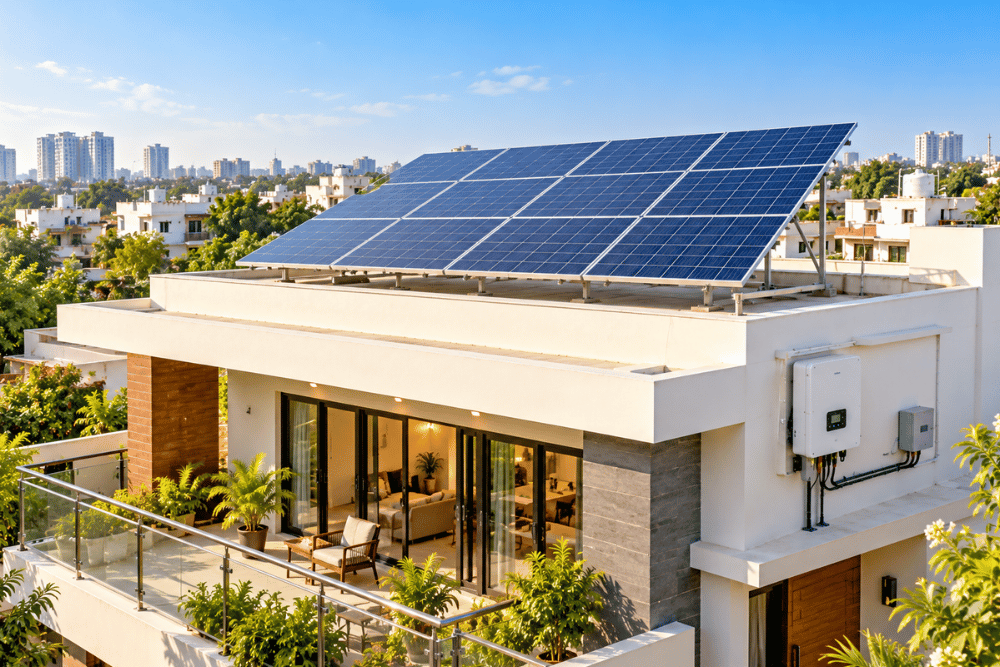
Residential Solar Installation
Power your home with clean, renewable energy through residential solar installation by Bhardwaj Solar Energy. A rooftop solar system allows you to harness sunlight and convert it into electricity for your everyday household needs, helping reduce your dependence on conventional electricity and manage long-term energy expenses. Whether you want to reduce your monthly electricity bills, make better use of your rooftop, or move towards a more sustainable lifestyle, a properly designed solar power system can be a valuable addition to your home.
At Bhardwaj Solar Energy, we focus on reliable, sustainable, and high-efficiency solar power solutions designed around your household's energy requirements. Our residential solar service covers the key considerations involved in choosing a suitable system, from understanding your electricity consumption and available rooftop space to selecting the appropriate solar configuration and equipment. The aim is to help you make an informed decision and choose a solution that suits your home's needs, budget, and long-term energy goals.
What Does Our Residential Solar Installation Service Include?
Residential solar installation involves more than placing panels on a rooftop. A complete system combines the right equipment and careful planning to convert sunlight into usable electricity for your home. Bhardwaj Solar Energy provides residential solar solutions designed around your household's electricity consumption, available roof space, budget, and energy requirements, helping you choose a suitable system for reliable performance and long-term value.
Our residential solar installation service includes the essential components and planning needed for a suitable rooftop solar solution:
- Solar panels: Generate electricity from sunlight to power household appliances.
- Inverter and electrical components: Convert solar-generated electricity into usable power and support safe system operation.
- Mounting and installation: Position and secure the panels appropriately according to rooftop conditions and installation requirements.
- Solar system options: Choose between on-grid, off-grid, and hybrid configurations based on your electricity needs and grid availability.
- Optional battery backup: Store electricity for compatible appliances when backup power is required.
Selecting the right system starts with understanding how your household uses electricity. For example, a home that operates air conditioners, refrigerators, and water pumps during the day may have different requirements from a household that consumes most of its electricity in the evening. Roof space, shading, system capacity, and your budget also influence the final design.
Before installation, it is important to understand the proposed equipment, expected electricity generation, warranty coverage, applicable approvals, and maintenance requirements. Bhardwaj Solar Energy aims to help homeowners make informed decisions and explore reliable solar power solutions that can reduce dependence on grid electricity while supporting a cleaner, more sustainable future.
How Residential Solar Panels Can Benefit Your Home
One of the main advantages of residential solar power is the opportunity to reduce the amount of electricity you purchase from the grid. During daylight hours, solar panels generate electricity that your home can use to operate compatible appliances such as fans, lights, refrigerators, washing machines, computers, and air conditioners. When solar generation meets part of your household demand, you need to draw less electricity from the grid during those periods. The actual savings depend on your system capacity, consumption patterns, electricity tariff, weather conditions, and applicable metering arrangements, so a realistic estimate should always be based on your specific requirements rather than a guaranteed savings figure.
For example, a household that regularly operates an air conditioner, refrigerator, and other appliances during the day may be able to use a substantial portion of its solar generation directly. A household that consumes most of its electricity at night may have different requirements and may need to consider its grid connection, electricity billing arrangements, and whether battery storage is worthwhile. Understanding when and how your family uses electricity is therefore just as important as selecting the number of solar panels.
Residential solar also helps make better use of suitable rooftop space and supports the transition towards renewable energy. Solar panels generate electricity without directly burning fossil fuels during operation, making them a practical option for households looking to reduce the environmental impact associated with conventional electricity consumption. With appropriate equipment selection and maintenance, a well-designed system can continue producing electricity over many years, although actual output varies with weather, shading, panel condition, and other operating factors.
Choosing the Right Solar System for Your Home
The right solar system depends on your electricity consumption, budget, rooftop space, and whether you need backup power during outages. An on-grid system is suitable for many homes looking to reduce electricity bills without batteries. An off-grid system operates independently of the electricity grid and requires battery storage, while a hybrid system combines grid connectivity with battery backup. Understanding these differences helps you choose a system that suits your household's needs without unnecessary costs.
Before selecting a solar system, consider the following factors:
- Monthly electricity consumption and seasonal changes.
- Daytime appliance usage and electricity requirements.
- Available rooftop space, sunlight, and shading.
- Backup power needs during electricity outages.
- Installation costs, equipment quality, and warranties.
- Grid connection requirements and applicable approvals.
For example, a household that uses air conditioning during the day may benefit from an on-grid system, while a family that needs backup power for essential appliances may prefer a hybrid solution. Reviewing your electricity bills and assessing your rooftop before installation helps you select a suitable system with realistic expectations for performance and savings.
Our Approach to Residential Solar Installation
A successful solar installation begins with understanding your home's electricity needs, rooftop conditions, and long-term energy goals. Bhardwaj Solar Energy focuses on careful assessment and practical planning to help homeowners choose a solar solution that suits their property, budget, and daily electricity consumption. Every home has different energy requirements, so factors such as monthly electricity bills, appliance usage, available rooftop space, roof condition, and sunlight exposure need to be considered before deciding on a system. This initial assessment helps establish the appropriate system capacity and identify the most suitable installation approach for your home.
Once your requirements are understood, the next step is to plan the solar system around your household's needs. The choice between an on-grid system and a solution with battery backup depends on your electricity usage, grid availability, and whether you need power during outages. The proposed design should also account for equipment suitability, installation requirements, expected electricity generation, and the overall project budget. Careful planning at this stage helps homeowners understand their options and avoid choosing a system that does not match their actual energy needs.
The installation plan covers the essential components required for your solar system, including:
- Solar panels and inverter
- Mounting structures and electrical safety components
- Optional battery storage, if required
Before installation begins, the proposed equipment, costs, warranty coverage, and applicable approvals should be clearly outlined. The system is then installed according to the planned design, with attention to secure panel mounting, proper electrical connections, and relevant safety requirements. For grid-connected systems, the applicable connection and metering procedures must also be considered. After installation, the system is checked according to the manufacturer's instructions, and homeowners receive guidance on system operation, performance monitoring where available, warranty coverage, and routine maintenance. This helps you understand how your solar system works and how to care for it to support reliable performance over time.
Maintenance and Long-Term Performance
Solar panels require relatively little routine maintenance, but regular inspections and appropriate cleaning help maintain their performance. Dust, leaves, bird droppings, and other debris can accumulate on panel surfaces, while shading or equipment faults may reduce electricity generation. Cleaning frequency depends on local conditions and the manufacturer's recommendations. Rooftop maintenance should always be carried out safely to avoid personal injury or damage to the solar system.
Monitoring your system's electricity generation through the inverter display or monitoring app, if available, can also help identify potential issues. If output drops unexpectedly and weather or seasonal changes do not explain the difference, a qualified technician should inspect the system. Regular monitoring and timely attention to faults can help maintain reliable performance and protect your investment over the long term.
Why Choose Bhardwaj Solar Energy?
Choosing a residential solar system is a long-term investment, so the right system design, quality equipment, and proper installation are essential. Bhardwaj Solar Energy helps homeowners explore solar solutions based on their electricity consumption, available rooftop space, budget, and energy needs. Our approach focuses on helping you understand your options and choose a system that offers a practical balance of performance, reliability, and long-term value.
From selecting a suitable system configuration to understanding equipment specifications and installation requirements, we help make the decision-making process clearer. We also highlight important considerations such as warranty coverage, applicable approvals, and ongoing maintenance so you know what to consider before investing in rooftop solar.
With a residential solar solution tailored to your home, you can take a step towards reducing your dependence on grid electricity and making greater use of renewable energy. Contact Bhardwaj Solar Energy to discuss your home's energy requirements and explore a solar solution that suits your needs.
Need Residential Solar Installation?
Get a Free Engineer Site Visit, 3D Shadow Analysis & Instant Quotation today.