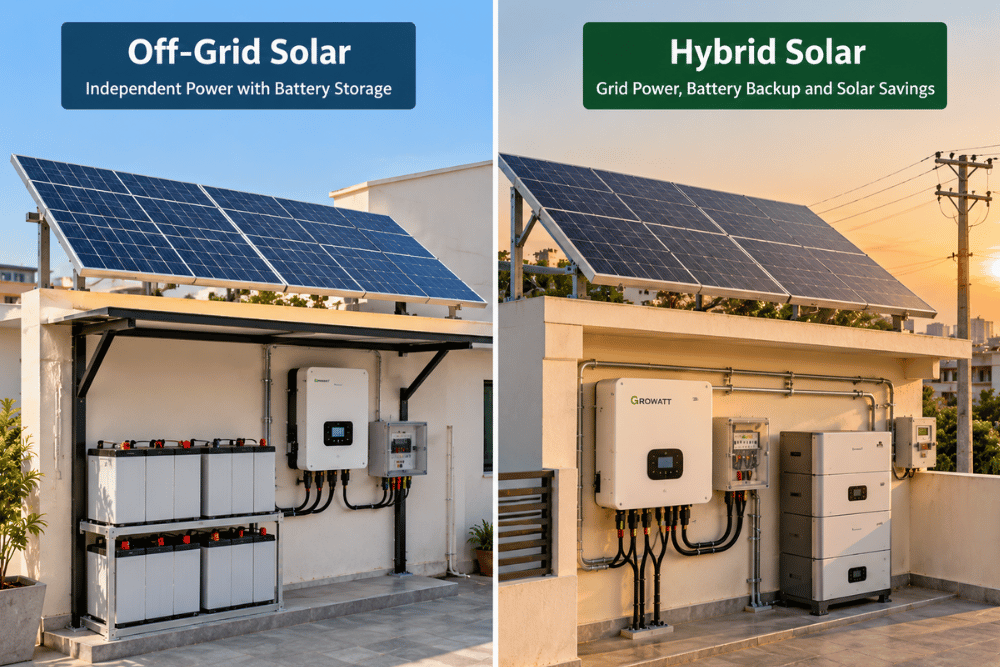
Off-Grid and Hybrid Solar
Get greater control over your electricity supply with off-grid and hybrid solar solutions from Bhardwaj Solar Energy. Designed to meet different energy needs, these systems combine solar panels with battery storage to provide usable power during the day and backup when sunlight is limited or grid electricity is unavailable, depending on the system configuration and stored energy. Whether you want to power your home, business, or remote property, the right solar solution can help reduce reliance on conventional electricity and keep essential appliances running during power cuts.
At Bhardwaj Solar Energy, we design off-grid and hybrid solar solutions around your daily electricity consumption, backup needs, available space, and budget. From choosing the right solar capacity to selecting suitable inverters and battery storage, we help you find a system that fits your requirements and supports dependable power for everyday use.
What Do Our Off-Grid and Hybrid Solar Solutions Include?
At Bhardwaj Solar Energy, we provide off-grid and hybrid solar solutions designed around your property's electricity needs and backup requirements. While both systems use solar panels and battery storage, they differ in how they manage power. An off-grid system operates independently of the electricity grid, relying on solar generation and stored energy, while a hybrid system combines solar power and battery storage with a grid connection for greater flexibility.
Our off-grid and hybrid solar solutions may include the following essential components:
- Solar panels: Generate electricity from sunlight to help meet your daily power needs.
- Solar inverter: Converts solar-generated electricity into usable power and manages energy flow within the system.
- Battery storage: Stores surplus solar energy for use when sunlight is limited or backup power is required.
- System controls and protection: Help regulate power flow and support safe, reliable operation.
The right system configuration depends on your electricity consumption, the appliances you need to power during an outage, and how long you want backup power to last. A household may need enough stored energy to run lights, fans, a refrigerator, and essential electronics, while a business may prioritise selected equipment or critical operations. Assessing these requirements helps determine suitable solar capacity, battery size, and inverter specifications for your property.
How Off-Grid and Hybrid Solar Can Benefit Your Property
One of the main benefits of off-grid and hybrid solar systems is the ability to use stored electricity when solar panels are not generating enough power. During sunny periods, the panels can supply electricity to connected loads and charge the batteries when conditions and system settings allow. The stored energy can then support selected appliances during the evening, at night, or during a grid outage in a hybrid installation. This can be especially useful for properties where maintaining access to electricity is important.
Off-grid systems can be suitable for remote locations or properties without a reliable grid connection. Since they operate independently of the utility grid, their design must account for energy consumption, battery capacity, seasonal sunlight, and periods of low solar generation. Hybrid systems may be more suitable for properties with a grid connection that also need battery backup. They can use solar power, stored electricity, and grid electricity according to the system configuration, providing greater flexibility in managing energy use.
Battery storage also helps make solar energy available beyond the hours of direct sunlight. However, backup duration depends on battery capacity, the power consumption of connected appliances, battery operating limits, and the amount of energy available when the backup period begins. A properly planned system can support essential electricity needs, but its capacity should be selected according to realistic consumption and backup expectations rather than assuming it will power every appliance indefinitely.
Choosing the Right Off-Grid or Hybrid Solar System
The right system depends on whether your property has a reliable grid connection, how much electricity you use, and which appliances need to operate during power outages. An off-grid system may suit a remote property or location without dependable grid electricity. A hybrid system is often worth considering when you want to remain connected to the grid while having battery backup available during outages.
Before selecting a system, consider the following factors:
- Electricity consumption: Daily energy use and the appliances you need to power.
- Backup requirements: Which essential appliances must operate during an outage and for how long.
- Battery capacity: The amount of energy that needs to be stored for later use.
- Solar generation: Available installation space, sunlight exposure, and seasonal conditions.
- System costs: Equipment quality, installation expenses, warranties, and future maintenance.
For example, a home that experiences frequent power cuts may benefit from a hybrid system sized to support essential appliances during outages. A remote property without a dependable grid connection may require an off-grid system with enough solar generation and battery storage to meet its needs through periods of limited sunlight. Reviewing electricity bills, appliance ratings, and expected usage helps establish suitable system capacity and realistic backup expectations.
Our Approach to Off-Grid and Hybrid Solar Installation
A successful installation begins with understanding your property's electricity needs, available power sources, and backup requirements. Bhardwaj Solar Energy considers daily energy consumption, appliance loads, expected backup duration, available installation space, sunlight exposure, and existing electrical arrangements when evaluating a suitable solution. These factors are particularly important for off-grid systems, which must meet electricity needs without relying on the utility grid, and hybrid systems, where battery backup must be coordinated with solar generation and grid availability.
Once the requirements are understood, the proposed system is planned around suitable solar capacity, inverter specifications, and battery storage. The design should account for which appliances will run simultaneously, how much electricity they consume, and how much stored energy may be needed during periods without sufficient sunlight. The proposed equipment, installation costs, warranty coverage, and applicable safety requirements should be reviewed before work begins.
The installation plan may include the following essential components:
- Solar panels and a compatible inverter.
- Battery storage and system controls.
- Mounting structures, wiring, and electrical protection equipment.
After planning is complete, the system is installed according to the agreed design, manufacturer's instructions, and relevant safety requirements. The installation is then tested and commissioned as required to check that the panels, inverter, batteries, and associated components operate correctly. Once the system is ready for use, customers should receive guidance on system operation, available monitoring features, battery care, warranty coverage, and maintenance requirements.
Maintenance and Long-Term Performance
Maintaining an off-grid or hybrid solar system involves caring for both the solar panels and the battery and inverter equipment. Dust, leaves, bird droppings, and shading can reduce panel output, while battery condition, electrical connections, ventilation, and inverter performance can affect how well the system operates. Regular cleaning and inspections should follow the manufacturer's recommendations and account for the conditions at your installation site.
Monitoring solar generation, battery charge levels, and overall system performance can help identify potential issues early. If the battery is not charging properly, backup time decreases noticeably, or the inverter displays a fault, a qualified technician should inspect the system. Proper battery management and routine maintenance can help extend equipment life and support reliable performance over time.
Why Choose Bhardwaj Solar Energy?
Choosing the right off-grid or hybrid solar system means understanding your electricity consumption, backup requirements, battery capacity, and available installation space. At Bhardwaj Solar Energy, we help customers assess these factors alongside their budget and power reliability needs to identify a suitable system configuration. This practical approach helps ensure that the selected equipment matches how you intend to use solar energy.
We also help you consider important details such as inverter and battery compatibility, expected solar generation, installation requirements, warranty coverage, and ongoing maintenance. Understanding which appliances need backup and how long they must run is especially important when determining battery capacity. These considerations help you set realistic expectations for system performance and make an informed investment.
Whether you're looking to power a remote property independently or add battery backup to your home or business, Bhardwaj Solar Energy can help you explore the available options. Contact us to discuss your electricity needs and find an off-grid or hybrid solar solution suited to your property.
Need Off-Grid and Hybrid Solar?
Get a Free Engineer Site Visit, 3D Shadow Analysis & Instant Quotation today.