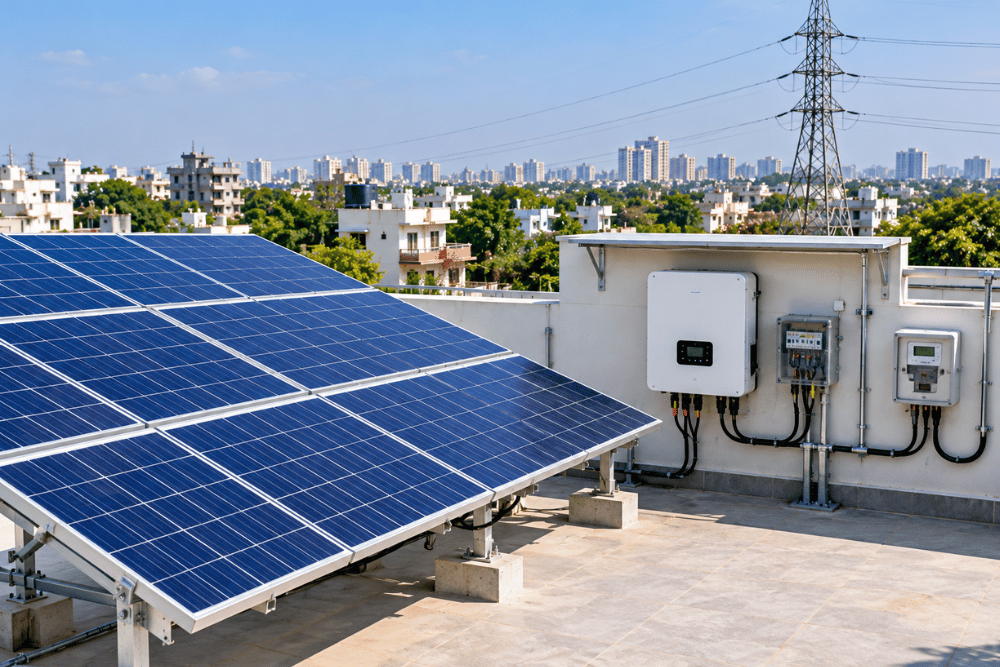
On-Grid Solar Systems
Reduce your reliance on grid electricity and make better use of solar energy with on-grid solar systems from Bhardwaj Solar Energy. These systems connect solar panels to the electricity grid, allowing homes and businesses to use solar-generated power during the day while remaining connected to their regular electricity supply. By generating electricity on-site, an on-grid system can help lower electricity expenses without the additional cost of battery storage, making it a practical option for properties with suitable rooftops and regular daytime energy consumption.
At Bhardwaj Solar Energy, we help homeowners and businesses explore on-grid solar solutions based on their electricity usage, available rooftop space, and budget. From assessing energy requirements to selecting suitable system capacity, solar panels, and inverters, we focus on planning a solution that makes effective use of available sunlight and supports your long-term energy needs.
What Does Our On-Grid Solar Installation Service Include?
An on-grid solar system combines solar panels, a grid-connected inverter, and the necessary electrical components to generate and supply solar power to your property. The system works alongside the utility grid, allowing your home or business to use solar-generated electricity when it is available and draw additional power from the grid when needed. When solar generation exceeds your property's immediate electricity demand, surplus electricity may be exported to the grid, depending on the applicable metering arrangements. Proper system design and installation help ensure that the components work together safely and suit your property's energy requirements.
Our on-grid solar installation service covers the key components required for a suitable system, including:
- Solar panels: Generate electricity from sunlight to help meet your daily energy needs.
- Grid-connected inverter: Converts solar electricity into usable power and synchronises with the grid.
- Mounting and electrical protection: Secure the panels and support safe system operation.
- Grid connection and metering: Address applicable connection procedures and metering requirements.
Choosing the right equipment and system capacity depends on your electricity consumption, available rooftop space, sunlight exposure, and daytime energy usage. For example, a home that regularly uses air conditioning during the day or an office with computers, lighting, and cooling systems operating throughout working hours may be able to use a significant portion of its solar generation directly. Roof condition, shading, inverter capacity, and local grid requirements must also be considered when planning the installation.
Before proceeding, it is important to review the proposed system capacity, equipment specifications, estimated electricity generation, installation costs, warranty coverage, and applicable approvals. Understanding these details helps you assess whether an on-grid system suits your property and how it may affect your electricity expenses. Since savings depend on energy consumption, solar generation, electricity tariffs, and metering rules, a system assessment provides a more realistic basis for estimating its potential benefits.
How On-Grid Solar Systems Can Benefit Your Property
One of the main benefits of an on-grid solar system is the opportunity to reduce the amount of electricity you purchase from your utility provider. During daylight hours, your solar panels generate electricity that can power appliances, lighting, office equipment, and other compatible electrical loads. When your property uses solar-generated electricity directly, it can draw less power from the grid, potentially lowering electricity expenses over time.
The financial benefit depends on factors such as system capacity, daytime electricity consumption, local electricity tariffs, weather conditions, and applicable net-metering or other billing arrangements. If your system generates more electricity than your property needs at a particular time, surplus power may be exported to the grid where permitted and credited according to the applicable rules. Understanding these arrangements before installation helps you assess the likely value of your system.
On-grid solar systems also allow properties to generate renewable electricity without requiring batteries for routine operation. This can simplify the system design and avoid the additional purchase and maintenance costs associated with battery storage. However, standard grid-connected systems generally shut down during a grid outage for safety reasons, even when sunlight is available. If you require electricity during outages, a suitable backup solution must be evaluated separately.
Choosing the Right On-Grid Solar System
Selecting the right on-grid solar system starts with understanding your electricity usage, available installation space, and budget. A system should be sized to suit your property's consumption and the amount of solar electricity you can use effectively. Installing a larger system does not automatically mean greater financial savings, particularly when surplus electricity receives limited compensation under the applicable billing arrangement.
Before selecting a system, consider the following factors:
- Electricity consumption: Monthly bills and typical daytime energy usage.
- Rooftop suitability: Available space, sunlight exposure, shading, and roof condition.
- System capacity: The amount of electricity the panels can reasonably generate.
- Equipment quality: Suitable panels, inverter specifications, and warranty coverage.
- Grid and metering rules: Applicable approvals, connection requirements, and surplus electricity arrangements.
For example, a home or business that consumes considerable electricity during daylight hours may be able to use more of its solar generation directly. A property with relatively low daytime demand may need a closer assessment of system size and the rules governing exported electricity. Reviewing electricity bills and usage patterns helps establish a suitable system capacity and realistic expectations for potential savings.
Our Approach to On-Grid Solar Installation
A successful on-grid solar installation begins with understanding your electricity requirements and assessing the suitability of your property. Bhardwaj Solar Energy considers monthly electricity consumption, available rooftop space, roof condition, sunlight exposure, shading, and existing electrical arrangements when evaluating a suitable system. These factors help determine the proposed capacity and identify the equipment and installation requirements needed to integrate solar power with your property's electricity supply.
Once the initial assessment is complete, the system design is planned around your energy needs, budget, and potential to use solar electricity during daylight hours. The proposed installation should clearly outline the panels, grid-connected inverter, mounting structures, wiring, electrical protection equipment, estimated generation, and project costs. Applicable grid-connection, inspection, and metering requirements should also be reviewed before installation so you understand the project scope and the process for connecting the system.
- The installation plan covers the essential equipment, including:
- Solar panels and a compatible grid-connected inverter.
- Mounting structures, wiring, and electrical protection components.
- Required grid-connection and metering arrangements, where applicable.
After planning is complete, the system is installed according to the agreed design, manufacturer's instructions, and relevant safety requirements. The installation is then tested and commissioned as required, with applicable grid-connection procedures completed. Homeowners or property managers should receive guidance on system operation, available performance monitoring, warranty coverage, and routine maintenance to help them manage the system effectively.
Maintenance and Long-Term Performance
Although on-grid solar systems generally require limited routine maintenance, regular inspections and appropriate cleaning are important for maintaining their performance over time. Dust, leaves, bird droppings, and other debris can accumulate on solar panels and reduce the amount of sunlight they receive. Shading, loose electrical connections, or inverter issues can also affect electricity generation. Cleaning and inspection schedules should take into account local environmental conditions and the manufacturer's recommendations, while rooftop maintenance should always be carried out safely to prevent injury or equipment damage.
Monitoring your system's electricity generation through the inverter display or monitoring application, where available, can help you identify changes in performance. If electricity generation drops unexpectedly and the difference cannot be explained by weather or seasonal variations, a qualified technician can inspect the system to identify potential faults. Keeping track of performance, maintaining the equipment properly, and addressing issues promptly can help protect your investment and support reliable solar electricity generation over the long term.
Why Choose Bhardwaj Solar Energy?
Choosing an on-grid solar system involves more than selecting solar panels; it requires the right system capacity, suitable equipment, and proper integration with your property's electrical supply. Bhardwaj Solar Energy helps homeowners and businesses explore solar solutions based on their electricity consumption, available rooftop space, budget, and energy requirements. By considering these factors, we aim to help customers understand their options and identify a system that suits their property and everyday electricity needs.
From evaluating system capacity and inverter specifications to understanding installation costs, warranty coverage, and applicable grid-connection requirements, careful planning helps you make a more informed investment. Understanding your daytime electricity consumption and local metering arrangements is also important when estimating potential savings and determining how effectively your property can use the electricity generated by the system.
Whether you are planning a new rooftop installation or looking to reduce your reliance on grid electricity, Bhardwaj Solar Energy can help you explore suitable on-grid solar options. Contact us to discuss your electricity requirements and find a solar solution that fits your property, budget, and energy goals.
Need On-Grid Solar Systems?
Get a Free Engineer Site Visit, 3D Shadow Analysis & Instant Quotation today.