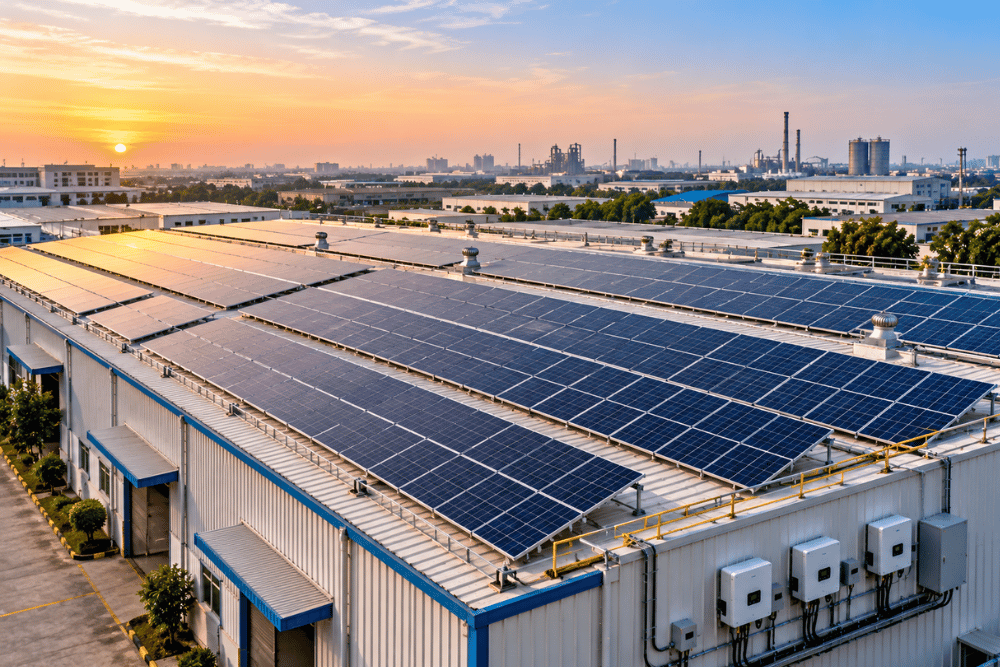
Industrial Solar Solutions
Power your industrial operations with solar energy solutions from Bhardwaj Solar Energy. Factories and large facilities often consume substantial amounts of electricity to run machinery, production lines, ventilation, lighting, and other essential equipment. A well-designed industrial solar system can help meet part of this demand with renewable electricity, reduce dependence on grid power, and manage long-term energy costs. Whether you operate a manufacturing plant, processing facility, warehouse, or large industrial building, solar power can help make productive use of suitable rooftop space while supporting your facility's energy needs.
At Bhardwaj Solar Energy, we provide industrial solar solutions planned around your facility's electricity consumption, operating schedule, available installation space, and budget. By assessing energy demand and evaluating suitable system capacity, equipment, and installation requirements, we help businesses explore practical solar options that align with their operations and long-term energy objectives.
What Do Our Industrial Solar Solutions Include?
Industrial solar installation requires careful planning to match a facility's electricity demand, operating schedule, available installation space, and existing electrical infrastructure. Factories and large buildings often have complex energy requirements because machinery, production lines, ventilation systems, and other equipment may operate for different hours and consume varying amounts of electricity. Bhardwaj Solar Energy focuses on these factors when evaluating suitable solar solutions, helping businesses understand the equipment, system capacity, and installation arrangements needed for their premises.
An industrial solar solution may include the following essential components:
- Solar panels and inverters: Generate electricity from sunlight and convert it into usable power for industrial operations.
- Mounting structures and electrical protection: Support secure panel installation and safe system operation.
- System design and configuration: Match the proposed system capacity to the facility's electricity demand and available installation space.
- Optional battery storage: Store electricity for later use when battery backup is appropriate for the facility's requirements.
The right system depends on the type of industrial activity, electricity consumption patterns, and the conditions of the installation site. For example, a factory running production machinery during daylight hours may be able to use solar electricity directly, while a warehouse may have different requirements based on its lighting, ventilation, and operating schedule. Roof condition, shading, electrical load patterns, available space, and budget must also be considered to develop a practical system design that suits the facility.
Before installation begins, businesses should review the proposed system capacity, equipment specifications, estimated electricity generation, project costs, and warranty coverage. The existing electrical infrastructure and applicable technical approvals or grid-connection requirements should also be assessed. Understanding these details helps businesses evaluate whether the proposed system meets their operational needs, makes appropriate use of available space, and offers realistic potential for long-term electricity cost savings.
How Industrial Solar Energy Can Benefit Your Facility
Electricity is a major operating expense for many industrial facilities, particularly those that rely on machinery, production equipment, compressors, pumps, ventilation, and industrial lighting. A properly designed solar system can generate electricity during daylight hours and supply a portion of the facility's energy demand. This can reduce the amount of electricity purchased from the grid when solar generation coincides with operational consumption. The actual financial benefit depends on system capacity, operating schedules, electricity tariffs, weather conditions, and applicable billing arrangements.
Industrial facilities with substantial daytime electricity demand may be able to use a significant share of their solar generation directly. For example, a factory running production equipment during daylight hours may use solar electricity while its operations are active. However, facilities that operate at night or have fluctuating production schedules need to assess when their electricity demand occurs and whether battery storage or other arrangements are appropriate. Understanding the relationship between energy consumption and solar generation is essential when estimating potential savings.
Industrial solar systems can also make better use of suitable factory rooftops, warehouse roofs, or other available installation areas. By generating renewable electricity on-site, facilities can reduce some of the environmental impact associated with conventional electricity consumption. With appropriate equipment selection, suitable installation conditions, and regular maintenance, a well-designed system can produce electricity over many years, although its actual output depends on weather, shading, equipment condition, and other operating factors.
Choosing the Right Solar System for Your Industrial Facility
Choosing the right solar system for an industrial facility requires a clear understanding of its electricity demand, production schedule, available installation space, and existing electrical infrastructure. Factories and large facilities often have substantial and varying power requirements, so the system should be selected according to how electricity is consumed throughout the day. An on-grid system may suit facilities that want to reduce grid electricity use during operating hours, while an off-grid system operates independently of the grid and generally requires battery storage. A hybrid system combines grid connectivity with battery storage and may be suitable for facilities that need additional backup flexibility.
Before selecting a system, it is important to assess several key factors:
- Energy demand: Electricity consumption, peak loads, and production schedules.
- Installation space: Available rooftop or ground space, structural suitability, and shading.
- Electrical infrastructure: Existing connections, equipment compatibility, and grid requirements.
- Operational continuity: Backup power requirements for critical equipment during outages.
- Project investment: Installation costs, equipment specifications, warranties, and expected electricity generation.
For example, a factory with high daytime electricity consumption may benefit from a solar system designed to offset power use during production hours. However, a facility operating continuously or relying on essential machinery may need a more detailed assessment of its energy requirements and backup options. Reviewing electricity bills, load profiles, and operating schedules helps determine a suitable system capacity and establish realistic expectations for potential savings. Bhardwaj Solar Energy can use these considerations to help businesses evaluate solar solutions that fit their facility's requirements, operational priorities, and budget.
Our Approach to Industrial Solar Installation
Successful industrial solar installation begins with understanding the facility's electricity demand, operating schedule, and site conditions. Bhardwaj Solar Energy considers factors such as production requirements, existing electricity consumption, available rooftop or ground space, structural suitability, shading, and electrical infrastructure when evaluating a suitable solar solution. Since factories and large facilities can have varying power loads and operating hours, this initial assessment helps determine the appropriate system capacity and identify the installation requirements for the project.
Once the facility's requirements have been assessed, the solar system is planned around its energy demand, available space, budget, and expected usage during operating hours. The proposed design should clearly outline the equipment, estimated electricity generation, installation costs, and warranty coverage so the business can understand the scope of the project before proceeding. The installation plan may include the following essential components:
- Solar panels and suitable inverters.
- Mounting structures, wiring, and electrical protection equipment.
- Optional battery storage, depending on the facility's requirements.
After the system design and equipment have been finalised, installation is carried out according to the agreed plan, the manufacturer's instructions, and applicable safety requirements. Electrical integration and grid-connection procedures are addressed where necessary, followed by system testing and commissioning. Once the installation is complete, the facility should receive guidance on system operation, performance monitoring where available, warranty coverage, and maintenance requirements. This helps businesses understand how to manage their solar system and support reliable performance over the long term.
Maintenance and Long-Term Performance
Industrial solar systems require appropriate maintenance to support consistent electricity generation and reliable operation. Dust, industrial residue, bird droppings, and other deposits can accumulate on panels, while shading, damaged wiring, inverter faults, or electrical connection issues may affect performance. Maintenance requirements depend on the installation environment, equipment specifications, and manufacturer's recommendations. Facilities in dusty or industrial environments may need a suitable cleaning and inspection schedule based on local conditions.
Monitoring electricity generation can help facility managers identify unexpected changes in system performance. Where monitoring tools are available, reviewing system output and equipment status can help highlight potential faults or reduced generation. If performance declines unexpectedly and weather or seasonal conditions do not explain the change, a qualified technician should inspect the system. Regular inspections and timely maintenance help protect the investment and support dependable operation throughout the system's service life.
Why Choose Bhardwaj Solar Energy?
Choosing an industrial solar system is a significant investment, and selecting the right solution requires careful consideration of energy demand, equipment quality, installation requirements, and long-term performance. Bhardwaj Solar Energy helps businesses explore solar options based on their facility's electricity consumption, operating schedule, available installation space, and budget. By understanding these requirements, businesses can evaluate suitable systems that support their operational needs and make effective use of available space for solar power generation.
From system selection and equipment specifications to installation planning and maintenance requirements, understanding each part of the project helps businesses make informed decisions. Factors such as estimated electricity generation, project costs, warranty coverage, and electrical integration should be considered before installation to establish realistic expectations and understand the potential value of the investment. A carefully planned system can help industrial facilities make greater use of renewable electricity while managing their energy requirements over time.
Whether you operate a manufacturing plant, warehouse, processing facility, or another industrial property, Bhardwaj Solar Energy can help you explore solar solutions suited to your site and operational needs. Contact us to discuss your facility's electricity requirements and explore an industrial solar solution tailored to your project.
Need Industrial Solar Solutions?
Get a Free Engineer Site Visit, 3D Shadow Analysis & Instant Quotation today.