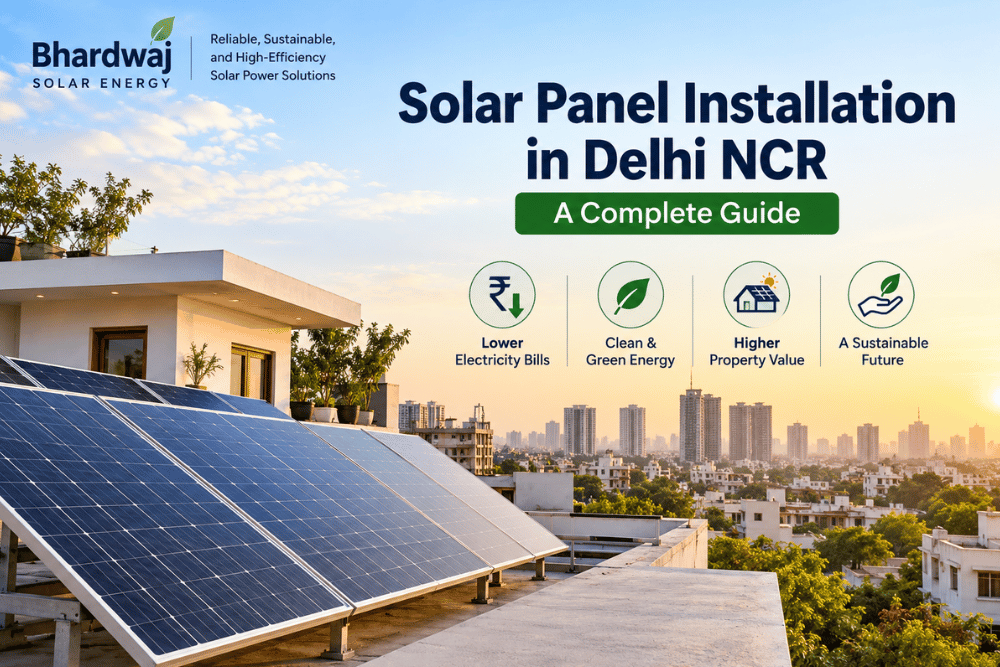
How Solar Panels Reduce Electricity Bills in Delhi NCR
Electricity bills are a regular concern for homeowners and business owners across Delhi NCR, particularly during the summer months when air conditioners, coolers, refrigerators, water pumps, and other electrical appliances are used more frequently. For many families, electricity expenses increase considerably when temperatures rise, while businesses must manage the additional cost of cooling offices, shops, restaurants, and commercial spaces. As energy consumption grows, more people are looking for practical ways to reduce their monthly electricity expenses without compromising their comfort or daily operations. Rooftop solar panels offer one such solution by allowing property owners to generate electricity from sunlight and use it to power their homes or businesses.
Delhi NCR receives substantial sunlight throughout the year, making rooftop solar worth considering for properties with suitable roof space and limited shading. Whether you own an independent house in Delhi, a residential property in Ghaziabad, a shop in Noida, or a commercial building in Gurugram, a properly designed solar power system can help reduce the amount of electricity you purchase from the grid. However, the actual savings depend on several factors, including your electricity consumption, the size of the solar system, the hours when you use electricity, the installation cost, and the applicable electricity billing arrangements. At Bhardwaj Solar Energy, we believe that understanding these factors is essential to making an informed decision about solar power. This guide explains how solar panels reduce electricity bills, what affects their performance in Delhi NCR, and how homeowners and businesses can evaluate whether rooftop solar is a suitable investment.
Why Are Electricity Bills High in Delhi NCR?
Electricity consumption in Delhi NCR often increases significantly during summer because cooling appliances operate for longer periods. A household that uses fans and lighting for most of the year may consume considerably more electricity when one or more air conditioners run for several hours every day. Refrigerators, washing machines, water pumps, televisions, computers, and other appliances contribute to the overall demand, while offices and shops may also operate cooling equipment throughout their working hours. The result is that electricity bills can vary considerably between seasons, making energy expenses difficult for some households and businesses to manage.
Consider a family living in an independent house in West Delhi. During winter, the family may use relatively little electricity for cooling, but during May and June, its air conditioner might operate throughout the afternoon and evening. If the house also contains multiple refrigerators, water pumps, and other appliances, monthly consumption can increase further. A similar situation can occur in Noida or Gurugram, where offices, retail outlets, and commercial properties require substantial electricity for air conditioning and equipment during the day. Although solar panels cannot eliminate every electricity expense, they can generate power during daylight hours and reduce the amount of electricity that must be purchased from the grid. For properties with substantial daytime electricity consumption, this can be an important advantage.
How Do Solar Panels Help Reduce Electricity Bills?
Solar panels convert sunlight into electricity that can be used directly by a property's electrical appliances. In a typical grid-connected rooftop installation, the panels generate direct-current electricity, and an inverter converts it into alternating-current electricity suitable for household and commercial use. When solar generation is available, compatible appliances can use that electricity, reducing the amount drawn from the utility grid. If the property's demand exceeds solar production, the grid supplies the remaining electricity. At night, when ordinary solar panels are not generating electricity, a system without battery storage generally relies on grid power.
For example, imagine a home in Ghaziabad where the refrigerator, fans, computers, and air conditioner operate during the day. When the rooftop solar system produces electricity, the house can use that power instead of purchasing the same amount of electricity from the grid. If the panels generate less electricity than the household needs, the difference continues to come from the grid. If the system produces more than the home consumes, the surplus may be exported to the grid when the approved metering arrangement permits it. The financial value of exported electricity depends on the applicable regulations and billing mechanism, so it should not automatically be assumed to have the same value as electricity consumed directly. This is why the best solar system is not necessarily the largest one, but the system that suits the property's electricity usage, roof space, and financial goals.
How Much Can You Save with Solar Panels?
The amount you can save depends on how much electricity your solar panels generate and how much of that electricity you use or receive credit for under your applicable billing arrangement. A household with high daytime consumption may be able to use a larger proportion of its solar generation directly, while a property that remains mostly unoccupied during daylight hours may have a different savings profile. Your current electricity tariff, system capacity, shading, weather conditions, equipment performance, and installation cost also affect the financial outcome. Therefore, it is important to calculate potential savings using actual electricity bills and a realistic estimate of solar generation rather than relying on a fixed percentage advertised for every property.
For a simple illustration, suppose a household purchases 600 units of electricity from the grid in a month. After installing solar panels, assume the household uses solar electricity to replace 250 units of its previous grid consumption during that month. Its grid electricity consumption would fall from 600 units to approximately 350 units, before accounting for any electricity exported to the grid or other changes in consumption. If the applicable variable energy charge were ₹7 per unit, the avoided charge associated with those 250 units would be ₹1,750. This is only an illustrative calculation, not a quotation or guaranteed saving for a Delhi NCR property. Actual bill reductions may differ because electricity tariffs vary and bills can include fixed charges, taxes, adjustments, and other components that do not disappear when grid consumption falls. A reliable estimate should also account for seasonal changes in solar generation and electricity usage.
The installation cost must be considered alongside the expected savings. A lower monthly bill is beneficial, but the overall financial value depends on the initial investment, maintenance requirements, equipment warranties, and how much electricity the system produces over its operating life. Before making a decision, compare quotations from suitable installers, check what each quotation includes, and ask for an estimate based on your location and consumption. This approach helps you understand the potential return on investment without relying on unrealistic promises about eliminating electricity bills or recovering the entire installation cost within a guaranteed period.
Why Rooftop Solar Makes Sense for Homes in Delhi NCR
For homeowners, rooftop solar can turn available roof space into a source of electricity. Independent houses, builder floors, and some other residential properties may have suitable areas for installing panels, although the available space, roof condition, ownership arrangements, and shading must be assessed first. Solar panels can be especially useful for homes that consume substantial electricity during daylight hours, including households where family members work from home, air conditioning operates throughout the afternoon, or electrical appliances are used regularly during the day.
Imagine a family in Rohini, Delhi, that runs an air conditioner in the afternoon, uses a refrigerator continuously, and operates a washing machine and water pump during daylight hours. A suitably sized rooftop solar system could supply part of the electricity needed by these appliances, reducing the family's reliance on grid electricity when the panels are generating power. However, if most of the household's electricity consumption occurs after sunset, a conventional grid-connected system without battery storage may not offset as much of that evening consumption directly. Understanding when electricity is used is therefore just as important as knowing how much electricity is consumed each month.
Apartment residents should also check whether they have access to an appropriate rooftop installation arrangement. In many apartment buildings, the roof is a shared space, and installing an individual system may require permission or coordination with the housing society, property management, or other relevant parties. Shared rooftop systems and other approved arrangements may be possible depending on the building and local rules. Before purchasing equipment, residents should confirm their installation rights, the available capacity, and the applicable connection and billing requirements.
Benefits of Solar Panels for Shops, Offices, and Commercial Buildings
Solar power can also be valuable for businesses in Delhi NCR because many commercial properties consume electricity during the same hours when solar panels generate power. Offices use computers, servers, lighting, and air conditioning, while retail shops may require lighting, refrigeration, billing systems, and cooling equipment throughout the day. Restaurants, clinics, educational institutions, warehouses, and other facilities may have additional electrical requirements. By generating some of their electricity on-site, businesses can reduce their grid consumption and potentially improve their control over recurring operating expenses.
For example, consider a retail shop in Lajpat Nagar that operates from morning until evening and uses air conditioning, lighting, refrigerators, and billing equipment. A properly planned rooftop solar system could generate electricity during a significant part of its operating schedule, allowing the shop to use solar power directly while reducing the amount purchased from the grid. A larger commercial property in Gurugram might evaluate a system based on its daytime load, available roof area, and annual consumption patterns. However, commercial projects require careful technical and financial assessment because electricity tariffs, demand charges, connection limits, and export arrangements can vary. Businesses should request a detailed proposal that explains the system design, expected generation, installation scope, and projected savings using their actual consumption data.
Choosing the Right Solar System for Maximum Savings
Choosing the correct system capacity is one of the most important steps in controlling the cost of a solar installation. A system that is too small may not meet a meaningful portion of your electricity needs, while a system that is unnecessarily large may require a higher initial investment without delivering a proportional financial benefit. The appropriate capacity depends on monthly consumption, daytime usage, usable roof space, shading, local installation conditions, and the rules governing grid connection and electricity export. Reviewing electricity bills for the previous 6–12 months can help establish a useful starting point for the assessment.
An on-grid system is often considered by properties that already have a grid connection and primarily want to reduce their electricity bills. These systems typically do not require batteries, which can help keep the initial cost lower than a comparable installation with battery storage. However, conventional grid-connected systems generally shut down during a power outage for safety reasons unless compatible backup equipment and an approved configuration are included. A hybrid system combines solar panels, battery storage, and a grid connection, potentially allowing selected appliances to receive backup power during outages. An off-grid system operates independently of the utility grid and requires suitable energy storage and careful planning to meet electricity demand when sunlight is unavailable. The best option depends on whether your main priority is reducing electricity bills, obtaining backup power, or operating independently of the grid.
In Delhi NCR, system design should also account for rooftop conditions, surrounding buildings, seasonal dust, and potential shading from trees or nearby structures. Panels should be positioned to receive suitable sunlight, and the installation should include appropriate mounting structures, wiring, electrical protection, and inverter equipment. An installer should explain the assumptions behind the generation estimate and identify any site-specific limitations that could affect performance. A careful assessment at the beginning can help prevent avoidable expenses and support better long-term results.
Solar Subsidies and Financial Assistance for Residential Customers
Eligible residential consumers in India may qualify for financial assistance through government rooftop solar initiatives, including the PM Surya Ghar: Muft Bijli Yojana. Such assistance can improve affordability for eligible households, but the actual benefit depends on current scheme guidelines, consumer eligibility, installation requirements, and the applicable application and approval process. Commercial and industrial properties should not assume that residential subsidy provisions apply to them.
Homeowners in Delhi NCR should verify the latest requirements through the official PM Surya Ghar portal and their relevant electricity distribution company before making financial commitments. Confirm which installation arrangements qualify, what vendor or technical requirements apply, and which documents and metering procedures are necessary. It is also important to distinguish a confirmed subsidy from a possible benefit that remains subject to approval. When comparing solar quotations, calculate the investment using verified costs and clearly identified incentives rather than assuming that every customer will receive the same subsidy amount.
Solar Panel Maintenance in Delhi NCR
Solar panels generally require limited routine maintenance, but regular monitoring and occasional cleaning can help maintain their performance. Dust, bird droppings, leaves, and other deposits can accumulate on panel surfaces, especially in areas affected by construction activity or dusty weather. The effect on electricity generation varies according to the amount of soiling, rainfall, panel angle, and local conditions. Cleaning should follow the equipment manufacturer's guidance and be carried out safely, with appropriate precautions for rooftop access and electrical equipment. Property owners should avoid risky cleaning practices that could damage the panels or cause injury.
Monitoring the system's electricity production is also useful. Many modern inverters provide a display or monitoring application that allows owners to track generation over time. If output falls unexpectedly, it may be worth checking whether the weather has changed, whether new shading has appeared, or whether the panels need cleaning. If the reduction continues without an obvious explanation, a qualified technician can inspect the inverter, wiring, mounting structures, and other components. Routine maintenance does not guarantee a particular level of production, but it can help identify problems early and protect the long-term value of the installation.
Why Choose Bhardwaj Solar Energy?
Selecting a solar installation company involves more than comparing the price of solar panels. Customers should look for a suitable system design, clear equipment specifications, safe installation practices, transparent quotations, and dependable support after installation. It is also important to understand the warranties covering the panels, inverter, workmanship, and other components, because their coverage and duration may differ. Before committing to a project, ask how expected generation has been calculated, what installation services are included, and how the company will support you if the system develops a fault.
Bhardwaj Solar Energy is committed to providing reliable, sustainable, and high-efficiency solar power solutions for customers looking to make better use of renewable energy. Whether you are a homeowner in Delhi, a family in Ghaziabad, a shop owner in Noida, or a business operator in Gurugram or Faridabad, the first step is to understand your electricity needs and evaluate the suitability of your property. A solar installation designed around your actual consumption can help reduce dependence on conventional electricity while supporting a cleaner and more sustainable energy future.
Frequently Asked Questions
Can solar panels reduce electricity bills in Delhi NCR?
Yes, solar panels can reduce the amount of electricity purchased from the grid by generating power for use at your property. The level of savings depends on system capacity, electricity consumption, sunlight, equipment performance, and applicable billing arrangements.
Are solar panels useful during Delhi's summer?
Solar panels can generate electricity during sunny summer days, which may help meet daytime demand from air conditioners and other appliances. Actual generation depends on system design, weather, temperature, shading, and panel condition.
How do I calculate my potential solar savings?
Start with your recent electricity bills, identify your consumption and tariff, and obtain an estimate of expected solar generation. Calculate how much generated electricity you are likely to use directly and account for applicable export credits, fixed charges, installation costs, and maintenance.
Do solar panels work at night?
Solar panels do not generate electricity from sunlight at night. A grid-connected property generally uses grid electricity after sunset, while a suitably designed battery-based system may use previously stored energy.
Can I install solar panels on my house in Delhi NCR?
Many independent houses and suitable commercial buildings can accommodate rooftop solar, subject to roof condition, available space, shading, electrical requirements, and applicable approvals. Apartment residents may need permission or a shared installation arrangement.
Is government assistance available for residential solar installation?
Eligible residential customers may qualify for assistance under the PM Surya Ghar: Muft Bijli Yojana, subject to current scheme requirements. Verify eligibility and the applicable process through official government sources before proceeding.
How can I get started with Bhardwaj Solar Energy?
Begin by reviewing your electricity consumption and the available rooftop space. You can then contact Bhardwaj Solar Energy to discuss your requirements and explore a suitable solar power solution.
Conclusion: Take a Smarter Approach to Electricity Savings
Solar panels can be a practical option for households and businesses in Delhi NCR that want to reduce grid electricity consumption and make productive use of their rooftops. The financial benefit depends on the amount of electricity generated, the proportion used directly, the installation cost, the applicable electricity tariff, and the rules governing exported electricity. A well-planned system should therefore begin with an assessment of electricity bills, roof conditions, daytime consumption, and long-term requirements rather than a decision based solely on the advertised price or a general savings claim.
If you are considering rooftop solar, compare suitable system options, ask for a realistic generation estimate, understand the equipment warranties, and verify whether any government financial assistance applies to your property. These steps will help you make an informed decision about the investment and avoid unnecessary costs. With its commitment to reliable, sustainable, and high-efficiency solar power solutions, Bhardwaj Solar Energy aims to help customers explore solar energy as a practical step towards lower grid electricity consumption and a greener tomorrow.
Bhardwaj Solar Energy — Reliable, Sustainable, and High-Efficiency Solar Power Solutions for a Cleaner and Greener Tomorrow.
Planning Rooftop Solar in Sonipat or Delhi NCR?
Book a 100% Free Site Survey & get up to ₹78,000* PM Surya Ghar Subsidy assistance.